

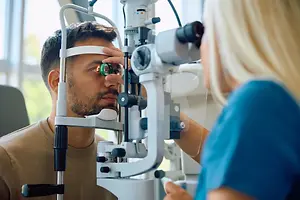
Your glasses no longer seem sharp, or an eye condition needs a closer look. Should you schedule with an optometrist or an ophthalmologist? Understanding the difference can help you choose an appointment without feeling like you need to diagnose the problem yourself.
Below, our eye care team discusses the main differences between these two types of eye doctors, and how to know which one you should see for your particular issue.
What Does an Optometrist Do?
An optometrist earns a Doctor of Optometry (OD) degree, typically through four years of optometry school following undergraduate studies. Optometrists provide primary eye care, including comprehensive eye exams, glasses and contact lens prescriptions, and diagnosis and treatment of many eye conditions.
An optometrist is often a good starting point for a prescription update, contact lens concerns, or routine monitoring. Their work extends beyond helping you see clearly: it can include eye disease management, depending on their training and state licensing rules. They can also recommend referral when more specialized care is needed.
You may also hear the term optician. An optician fits and dispenses eyewear using a prescription from an eye doctor, but does not diagnose or treat eye disease.
What Does an Ophthalmologist Do?
An ophthalmologist is a medical doctor (MD) or doctor of osteopathic medicine (DO) who completes medical school and specialized residency training in eye care and surgery. Ophthalmologists diagnose and treat eye diseases, prescribe medications and corrective lenses, and perform operations such as cataract surgery. A consultation does not automatically mean you need surgery.
An ophthalmologist may be appropriate when a condition needs advanced treatment or surgical evaluation. Our glaucoma treatment includes medical, laser, and surgical options.
Optometrist vs. Ophthalmologist: Which Should You See?
Think about what you need from the visit rather than trying to choose the “better” type of doctor. For routine eye exams and new glasses or contacts, either provider can help; an optometrist is often a practical starting point. For a cataract surgery consultation or complex eye disease, an ophthalmologist may be the appropriate choice.
If you already have an eye condition, follow your treating clinician’s guidance about who should manage your ongoing care. When booking, describe what has changed, when it started, and any existing diagnoses. You do not have to know which provider you need before contacting the practice.
When Should You Seek Urgent Eye Care?
Sudden vision loss, severe eye pain, a new burst of floaters or flashes, or a dark curtain across your vision needs urgent assessment. Contact an eye doctor immediately, or go to an emergency department if immediate eye care is unavailable. Do not wait for a routine appointment or an online request to be answered.
How Can Both Providers Work Together?
At Redwood Eye Center, optometrists and our ophthalmologist collaborate on conditions such as glaucoma and cataracts. Meet our eye doctors to learn about the team.
For example, an optometrist may identify a cataract during an exam, while an ophthalmologist evaluates whether surgery is appropriate. An eye disease diagnosis does not automatically mean you must stop seeing your optometrist. The right arrangement depends on your condition, its severity, and whether you need a procedure. Your care can involve both providers as your needs change.
Find the Right Eye Care in Vallejo
Not sure where to begin? Redwood Eye Center offers optometry and ophthalmology in Vallejo. For nonurgent concerns, request an appointment and tell our team what you need help with. We can guide you toward the appropriate provider and next step.